Part of being a successful beekeeper is learning how to identify, prevent, and treat a wide range of diseases. Honey bees face many threats from viruses, parasites, and other disease-spreading organisms.
One such threat is European foulbrood (EFB), a disease that spreads from the bacterium Melissococcus plutonius. Like American foulbrood, EFB contaminates a hive’s food supply, targets the brood, and lives on and spreads from beekeeping tools for a long time.
The more you know about European foulbrood, the better your chance of preventing and treating it in your hives. To help you keep your honey bee colonies safe, here’s our guide on how to treat European foulbrood in honey bees.
The Start and Spread of European Foulbrood
European foulbrood spreads when the bacteria contaminate a hive’s food supply. Nurse bees unknowingly feed the brood this contaminated food, allowing the bacteria to infect the young larvae and begin multiplying in their guts.
As the bacteria multiply, they compete with the healthy larvae for food, often causing the larvae to starve to death before nurse bees can cap them within their cells. Nurse bees will then clean the dead larvae from the brood cell and pick up the bacteria in the process. In this way, the disease spreads to other larvae throughout the hive, quickly leading to infected colonies.
Other ways that the bacteria Melissococcus plutonius can be brought into a hive is through robber bees or infected drifting bees who enter the hive. Additionally, if the hive consumes infected honey or pollen, EFB can spread very quickly.
The Disease Cycle of European Foulbrood
Here’s how EFB finds its way into an otherwise healthy colony.
- Larvae ingest the bacteria transferred from nurse bees in the hive or from the brood food.
- The bacteria spread within the gut of the infected larvae.
- The bacteria typically steal food from the larvae, causing them to starve.
- The infected larvae turn from pearly white to yellow or brown, indicating disease. Sometimes, the surviving larvae make it to adulthood, spreading the disease through their faeces and infecting the colony this way.
- Nurse bees remove the diseased brood from the cells, exposing themselves to the disease.
- The cycle continues this way, with the nurse bees spreading the bacteria to the bee larvae through brood food.
What Are the Signs of European Foulbrood?
European foulbrood has a few symptoms that you should be on the lookout for. If you can catch it early, you can prevent the entire honey bee colony from falling victim to this disease.
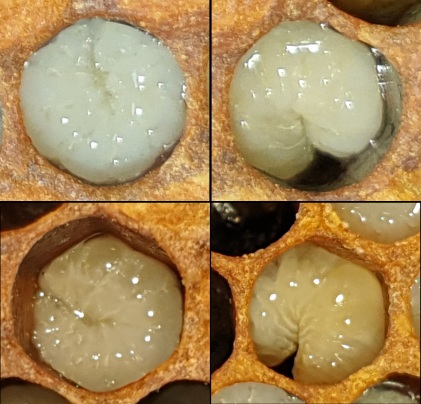
Check your hive’s brood cells for imperfections, such as patchy cells and unhealthy larvae. Uninfected larvae will be a pearly white colour. Dead or infected larvae will be yellow, brown, or a dark brown colour. Other signs of this brood disease include the following:
- Strong ammonia smell
- Uneven or patchy brood pattern
- Coiled or twisted position (rather than a C-shape of healthy larvae)
- Dead larvae will appear dried out and rubbery
Diseased larvae will also appear twisted, melted or rubbery. Unlike American foulbrood, you will often find victims of European foulbrood in uncapped cells. European foulbrood doesn’t cause the spores or the rotten, sulphurous odour that comes with American foulbrood.
How to Treat European Foulbrood in Honey Bees
Preventing and stopping the spread of the disease is vital to keeping your honey bees safe from this dangerous brood disease. European foulbrood is challenging to detect because it doesn’t often appear for long periods, and the larvae don’t show signs until it’s too late.
This disease is more common in stressed or unhealthy hives, so monitor your adult bees’ health and do what you can to help them thrive. Proper sanitation practices are also vital, especially since the bacteria can linger on your tools, hive components, supplies, and other beekeeping equipment for years.
Treatment Options
Presently there is no cure for EFB, but there are treatment options available that can help beekeepers save healthy bees.
Some antibiotics are available overseas to treat diseases like EFB, but in Australia there are many regulations in place prevent the use of such products.
Using a testing kit to verify that you are dealing with European foulbrood and not American foulbrood or some other type of infection is also a good idea.
Preventing European Foulbrood
Beekeepers can implement a few European foulbrood control measures to ensure their colony’s survival. Here are some of the most effective methods to prevent disease.
Early Detection
Like so many other diseases, early detection can make a world of difference for infected hives. Brood frames should be thoroughly examined at least twice a year, typically in March and October.
When examining the hive, remove the bees from each frame and examine the brood nest. You should be looking for an unusual brood pattern, including patchy or uneven patterns, dead or discoloured larvae, and the ammonia or sour smell.
If you suspect that your hive is infected, completing the ropiness test is crucial to determine whether it’s EFB or American foulbrood. To do so, insert a matchstick into one of the infected cells, withdraw it slowly, and examine the ropy thread. If it’s approximately a half-inch long, it’s most likely EFB. If it’s one to two inches long, it is most likely AFB.
Management
The beekeeper’s primary job is to ensure the colony is well cared for and has minimal stress so they can focus on their work. The main factors that cause stress in a colony are related to food and weather.
To reduce stress, beekeepers should be aware of when nectar and pollen are in short supply and be prepared to supplement with food sources like pollen substitutes (protein) and sugar (carbohydrates) such as Beewise ProSweet. Maintaining proper nutrition throughout the year will ensure the colony is strong enough to produce brood, forage, and prepare for winter.
Additionally, temperatures dropping can impact the colony more than you may realize. Hives should be placed in a properly ventilated, dry area with the entrance facing the sun. Diseases such as EFB and AFB thrive in cold, wet climates, so reducing the bees’ exposure to these temperatures can significantly help.
Sanitation
Because it's highly contagious, EFB can remain present and active in a colony for years, circulating its exposure through nurse bees, bee larvae, and the beekeeper’s tools. Sanitation is essential to preventing the decimation of a colony. Sanitize your beekeeping tools with bleach or other disinfecting solutions to ensure the bacteria is not present on your equipment.
Beekeepers should also make sure to replace 30% of their brood frames every year, even if no bacteria or infection is present. Proper practices will ensure the colony stays healthy and thriving.
What Causes European Foulbrood?
EFB is more common when colonies have recently experienced stress or environmental changes. Let’s explore the common causes of European foulbrood in this section.
Environmental Stressors
Bees are creatures of habit, so when something changes in the hive, it can cause stress to the entire colony. When colonies become infected, there may have been pests or other diseases in the hive. Beekeepers can help reduce stress by being proactive in their inspections, checking on the brood, and taking steps to prevent brood disease.
Weather Conditions
Cool, wet weather can be harmful to bees as they try to keep the hive warm. They vibrate their bodies to generate heat and keep the temperature up within the hive. To do so, adult bees must use a substantial amount of energy. Many viruses are spread from faeces in the hive during the cold and windy months because bees can’t go on their cleansing flights.
Poor Nutrition
A lack of nectar or pollen can lead to poor nutrition in bees, making them more susceptible to disease. Malnourished bees are weak and don’t live as long or produce as much brood as healthy bees can. Beekeepers can supplement their colonies’ strength and vitality by supplementing them with a food source. Something as simple as regular feedings of sugar syrup can make a significant improvement to their overall health.
Protecting your colony from brood diseases like European foulbrood is essential for bees’ survival. With the global honey bee populations dropping at alarming rates, everything possible should be done to ensure their survival, so it’s more critical than ever that we take good care of this endangered species.